
Performance creative in 2026: what's actually working on Meta
 Siddhant AryanLead Designer · AI Automation
Listen to this article
The short answer
On Meta in 2026, creative is the targeting: the algorithm finds the audience, and your ad's first second decides whether you pay for attention or for skips. What's winning: hooks that open on motion, a bold claim or a relatable problem; native, shot-on-phone and UGC-style formats over polished spots; and a testing engine that ships batches of variations, kills losers fast and scales the hooks that hold attention.
On this page
On Meta, creative is the targeting now. The algorithm finds the audience — your job is to stop the scroll and earn the watch. Here's what's working as we move through 2026.
The first second is everything
If the opening frame doesn't hook, nothing after it matters. We lead with motion, a bold claim, or a relatable problem in the first second — not a logo animation.
The mechanism is worth understanding: Meta's delivery reacts to early engagement signals, so an opening that holds viewers earns cheaper distribution for the whole campaign. The hook isn't a creative flourish — it's the input the algorithm prices your ad on.
Native beats polished
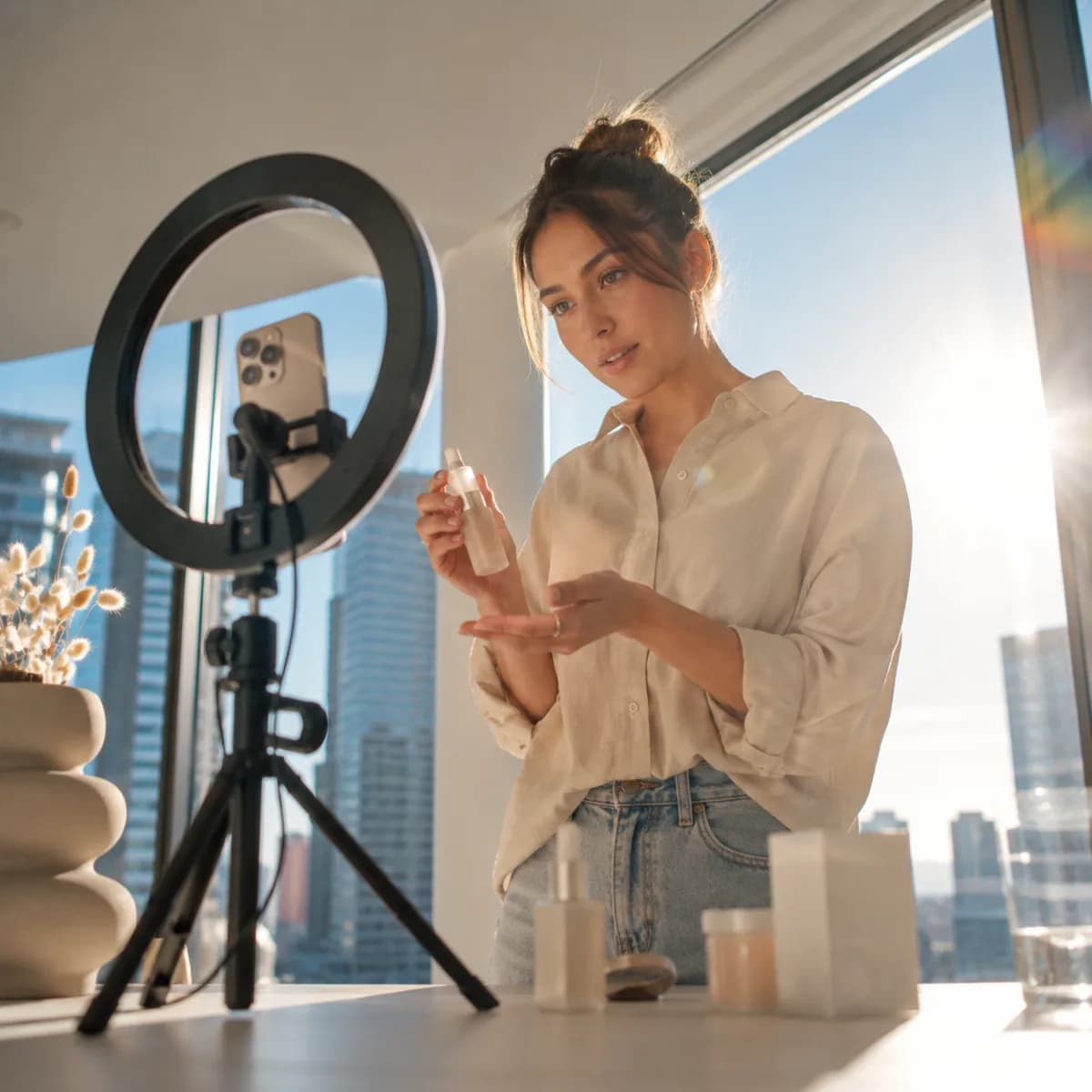
Ads that look like content outperform ads that look like ads. Shot-on-phone, creator-style and UGC formats consistently beat over-produced spots for direct response.
Polish still has a place — brand moments, premium products, retargeting to warm audiences. But for cold direct response, the feed rewards what belongs in it: a person talking to camera, a real result on screen, captions doing the work for silent viewers. Production budget moves from gloss to volume.
Hooks earning their spend right now
- The problem, verbatim — open with the exact sentence your customer says out loud
- Result first — show the after, then explain; proof buys the next ten seconds
- Pattern breaks — abrupt motion, an unexpected setting, a hand entering frame
- Founder to camera — one honest take beats a scripted ad for trust-led services
Volume and iteration
Winners come from testing many angles, not perfecting one. We ship batches of variations, kill the losers fast, and pour budget into the hooks that hold attention.
A practical rhythm: each batch tests distinct angles (price, proof, problem, objection), each angle gets a few hook variants, and decisions run on a weekly cadence against cost per result — not likes. Creative fatigue is the tax on winners, so the pipeline never stops: this week's champion is next month's control to beat.
Creative is a system, not a lottery
Brands that win on Meta don't have magic ideas — they have a weekly loop: batch, launch, read, kill, scale, refresh. The loop is the asset; any single ad is just this week's output.
Key takeaways
- Win the first second or lose the view — early hold is the signal Meta prices your whole campaign on.
- Native, creator-style creative beats polished ads for cold direct response; save the gloss for warm audiences and brand moments.
- Test many hooks on a weekly kill-or-scale cadence; treat creative fatigue as a certainty and keep the pipeline moving.
Frequently asked questions
Why is creative called 'the new targeting' on Meta?
Since detailed targeting options narrowed and automation (Advantage+) took over delivery, the algorithm decides who sees your ad largely from who engages with it. The creative's hook and angle now do the audience-selection work that manual targeting used to.
How many ad variations should I test?
Think in angles first: 3–4 distinct angles (problem, proof, price, objection), each with 2–3 hook variants per batch. That's enough signal to find a winner without spreading budget so thin nothing exits learning.
Does UGC-style creative work for serious or premium brands?
Yes — 'native' means fitting the feed, not looking cheap. A premium brand's version is a well-lit founder or customer speaking plainly, real results on screen, clean captions. It's the ad-ness you remove, not the quality.
How fast does ad creative fatigue on Meta?
At meaningful spend, expect a winning ad to decay over weeks as frequency climbs and CPMs rise — watch cost per result and frequency rather than a calendar. The defence is a steady refresh pipeline, not a bigger budget on a tired ad.
What metric should decide which creative wins?
Cost per qualified result (lead or purchase) with proper Pixel + Conversions API tracking — supported by hook rate (3-second holds ÷ impressions) to diagnose openings. Likes and raw CTR are directional at best.
Tools & next steps
Put this into practice, go deeper, or see how we'd do it for you.
Written by

Mr. Siddhant Aryan
Lead Designer & AI Automation, Global Info Edge
Lead designer and AI-automation specialist at Global Info Edge with 5 years building fast, conversion-focused websites and the workflows that run behind them.
View full profile