
You're paying for clicks, then losing them on WhatsApp. An AI chat inbox is the fix.
 Chandan KumarFounder · Performance Marketing Specialist
Listen to this article
The short answer
In performance marketing, every rupee of ad spend ends in a conversation — and in India that conversation almost always happens on WhatsApp, where most businesses answer too slowly to convert. A WhatsApp AI chat inbox is the fix: it catches every enquiry (click-to-WhatsApp ad, form, missed call) in seconds, answers the first questions, qualifies whether it's a real buyer, and hands a warm, briefed lead to your team — at any hour. The maths is simple and brutal: you already paid for the click, so converting a few percent more of the leads you have drops your true cost-per-acquisition further than any bid tweak. It's the cheapest conversion lift available — not more traffic, but finally catching and closing the traffic you're already buying. Keep AI on the instant first response and qualification; keep humans on the close.
On this page
- Every ad ends in a conversation — and you're losing it
- What a WhatsApp AI chat inbox actually does
- The conversion maths a performance marketer can't ignore
- Speed is the lever — and AI is how you actually pull it
- Close the loop: feed conversions back into the ads
- Keep AI on the catch, humans on the close
- Key takeaways
- Frequently asked questions
Here's a conversation I have almost every week. A founder is frustrated with their ads — the leads are coming in, the spend is real, but the sales aren't landing, and they want me to 'fix the campaigns'. So I ask to see what happens after someone clicks. Nine times out of ten, the trail leads to WhatsApp: a click-to-WhatsApp ad, or a form that pings a WhatsApp number, and then a queue of 'Hi, is this available?' and 'What's the price?' messages sitting unanswered for three, six, sometimes twenty-four hours — because the one person who watches that number was busy, asleep, or serving a walk-in customer. The campaigns were never the problem. They'd built a beautiful machine for generating WhatsApp enquiries and no machine at all for answering them. In seventeen years of managing performance budgets, I've learned that a click is only ever worth what happens in the conversation after it — and in India, that conversation is on WhatsApp. So before I touch anyone's bids, I look at their WhatsApp inbox. In 2026, the highest-leverage thing you can bolt onto a performance campaign isn't a new audience or a cleverer creative — it's an AI chat inbox that makes sure not one paid-for enquiry goes cold.
Every ad ends in a conversation — and you're losing it
Performance marketers obsess over everything up to the click: the targeting, the creative, the bid, the landing page. But the click isn't the conversion — it's the start of a conversation, and that conversation is where the money is actually won or lost. You can have the cheapest leads in your category and still go broke if those leads land in a WhatsApp queue that nobody answers for hours. The dashboard says 'lead'; the customer, having heard nothing back, has already messaged two competitors and bought from whoever replied first.
And in India this isn't an edge case — it's the main case. A huge share of paid enquiries now arrive on WhatsApp, by design: click-to-WhatsApp ads are some of the best-performing ad formats Meta offers here, precisely because people would rather start a chat than fill a form. Which means the WhatsApp inbox isn't a support afterthought — it's the literal point of conversion for your entire ad budget. If it's slow, every campaign upstream is being quietly undermined, and no amount of bid optimisation will fix a lead that died waiting for a reply.
Note
The most expensive line in your ad account is invisible: the leads you paid to generate that go cold in an unanswered WhatsApp queue. They don't show up as wasted spend — they show up as 'leads' on the dashboard and 'not interested' in the CRM. The truth is usually 'we replied too late'.
What a WhatsApp AI chat inbox actually does
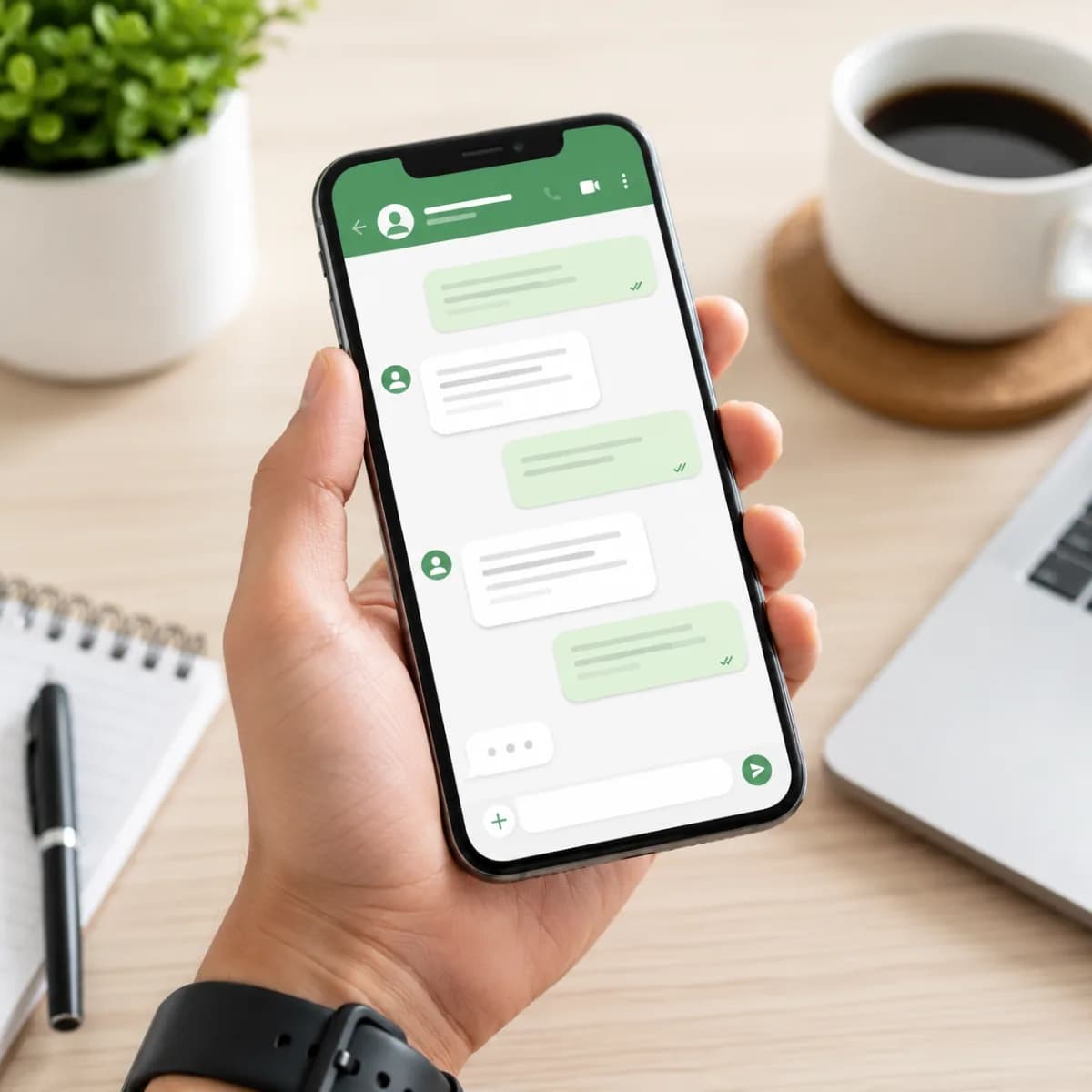
A WhatsApp AI chat inbox is a single, shared inbox for your WhatsApp enquiries with an AI agent sitting inside it — and it changes the moment of conversion completely. The instant a message arrives, whether from a click-to-WhatsApp ad at 2pm or 2am, the AI responds: it greets the customer by context, answers the obvious first questions (price, availability, location, timing), and starts qualifying whether this is a genuine buyer or a tyre-kicker. No one is kept waiting, ever, because the first response no longer depends on a human being awake and free.
From there it does the unglamorous work that decides conversion. It captures the lead's details into one record, tags where they came from (which campaign, which ad), and routes a qualified, warm, briefed conversation to the right salesperson — who picks it up already knowing what the customer wants instead of starting cold. It's the difference between a lead that's greeted, helped and held within ten seconds, and one that sits in a queue going cold. Same ad spend, same leads — radically different conversion, because the conversation finally happens at the speed the customer expects.
What is a WhatsApp AI chat inbox?
A shared WhatsApp inbox with an AI agent inside it that answers every incoming enquiry in seconds — greeting the customer, answering common questions, qualifying whether they're a real buyer, capturing their details and ad source, and routing a warm, briefed conversation to a human to close. It turns WhatsApp from a slow, easily-missed queue into the instant conversion layer for your paid traffic.
The conversion maths a performance marketer can't ignore
Let me put this the only way that matters to a performance marketer: in cost-per-acquisition terms. You've already paid to generate the lead — that money is spent whether the lead converts or not. So anything that lifts the conversion rate of leads you already have lowers your true cost-per-customer directly, and usually more cheaply than anything you can do in the ad account. A faster, sharper WhatsApp response that turns even a few more percent of enquiries into customers drops your CPA further than a bid adjustment, a new audience, or another round of creative — because it's working on the half of the funnel everyone ignores.
Think about what the alternative actually is. To get the same number of extra customers from the ad side, you'd have to spend more — more budget, more leads, a bigger invoice — just to make up for the ones leaking out of a slow inbox. Fixing the inbox gets you those customers from spend you've already made. That's why I tell founders to look here before raising budget: the WhatsApp AI inbox is often the single cheapest conversion lift in the whole funnel, and it compounds with every campaign you run on top of it.
By the numbers
You already paid for the click, so the cost of the lead is sunk. Converting a few more percent of the leads you already have lowers your true cost-per-acquisition more than almost any bid or targeting change — because it works on the conversation after the click, where most ad budgets quietly leak. More traffic costs more money; converting your existing traffic costs almost nothing.
Speed is the lever — and AI is how you actually pull it
The reason this works is the oldest rule in lead handling: intent decays fast. A customer who messages your ad is at peak intent in that moment — phone in hand, problem in front of them, competitors one tap away. Reach them in seconds and you're talking to a hot buyer; reach them an hour later and you're talking to a cooler, distracted person who's probably already in another chat. Everyone knows this, and almost nobody can do it manually, because the best leads arrive in the evenings and on weekends, exactly when no human is watching the WhatsApp number.
That's the gap AI closes that a human team realistically can't. An AI agent hits the five-minute window — actually, the five-second window — every single time, on every enquiry, at every hour, without fatigue or a day off. It's not that AI is cleverer than your salesperson; it's that it's always there for the one part of the conversion that's purely about speed. Your salesperson then inherits a warm, qualified lead at a civilised hour instead of chasing a cold one. The AI buys the moment; the human wins the deal.
Why AI catches the conversion a human team misses
- Instant, every time — first reply in seconds on every enquiry, 24/7, including the evenings and weekends when the best leads arrive.
- No queue, no fatigue — it doesn't get busy, tired, or distracted by a walk-in customer.
- Qualifies before it routes — your team spends time only on warm, briefed, ready-to-talk leads.
- Tags the source — every conversation tied back to the campaign and ad that drove it, so you can optimise on what converts.
Close the loop: feed conversions back into the ads
Here's the part that turns a WhatsApp AI inbox from a conversion tool into a performance-marketing weapon: it tells you which ads produced real customers, not just cheap clicks. Because the inbox captures each lead's source and tracks whether they qualified and converted, you can finally feed qualified-lead and customer signals back into Google and Meta — instead of optimising toward raw form-fills or message-starts that the platforms count as success but your bank account never sees. The ad algorithms then go and find more of the people who actually buy, not more of the people who merely message.
This is the same discipline that decides whether any automated ad account works: the platform optimises toward whatever you tell it is a conversion, so if you only count 'started a WhatsApp chat', it will efficiently buy you more chat-starters who never buy. Wire the real outcome back — qualified, converted, ideally with a value — and the whole machine sharpens. The WhatsApp AI inbox is where that truth gets captured, which is why it improves not just your conversion rate but the quality of every campaign feeding it.
Keep AI on the catch, humans on the close
None of this means handing your sales conversations to a bot — and if you do it badly, that's exactly the trap. The line that works is clear: AI owns the catch — the instant first response, the FAQs, the qualification, the routing — and humans own the close, the part that needs judgement, trust and a real relationship. The moment a conversation moves from 'is this available and how much' to genuine buying intent or negotiation, it hands to a person, warm and with full context, never making the customer repeat themselves. Customers don't mind a fast, helpful AI first reply; they mind being trapped in a loop with no way to reach a human.
So the build is incremental and guard-railed: let the AI handle the first response and the obvious questions for your highest-volume campaigns, give it your brand voice and clear rules on what it can't say and when to escalate, and widen its remit only as you trust it. Measure first-response time (it should collapse to seconds), the share of enquiries answered (it should approach 100%), and your lead-to-customer conversion rate (it should climb). Do that, and you stop losing the expensive leads you worked so hard to generate — and you finally get paid for the traffic you're already buying.
Key takeaways
- Every ad ends in a conversation, and in India that's WhatsApp — the literal point of conversion for your ad budget. A slow, easily-missed WhatsApp queue quietly undermines every campaign upstream; the leads show up as 'leads' on the dashboard and 'not interested' in the CRM, when the truth is you replied too late.
- A WhatsApp AI chat inbox is the cheapest conversion lift in performance marketing. You already paid for the click, so converting a few more percent of existing leads lowers your true cost-per-acquisition more than any bid or audience change. AI hits the five-second response window on every enquiry, 24/7 — the part of conversion that's purely about speed, which a human team can't do manually.
- Catch with AI, close with humans, and feed the result back to the ads. Let AI own instant first response, FAQs, qualification and routing (with guardrails and escalation); let your team own the close. Capture each lead's ad source and real outcome, and send qualified-lead/customer signals back to Google and Meta so they buy more real buyers, not more cheap clicks.
Frequently asked questions
What is a WhatsApp AI chat inbox?
It's a shared WhatsApp inbox with an AI agent inside that answers every incoming enquiry in seconds — greeting the customer, answering common questions like price and availability, qualifying whether they're a genuine buyer, capturing their details and which ad they came from, and routing a warm, briefed conversation to a human to close. For performance marketing it matters because it turns WhatsApp from a slow queue where paid leads go cold into the instant conversion layer for your ad spend.
How does a WhatsApp AI inbox improve ad conversion rates?
By making sure no paid-for enquiry goes cold. Most WhatsApp leads from ads decay fast — intent peaks at the moment someone messages and fades within the hour — and human teams can't reliably reply in seconds, especially evenings and weekends when the best leads arrive. An AI agent hits that window every time, on every enquiry, 24/7, then hands a qualified lead to your team. Converting more of the leads you already paid for is usually the cheapest way to lift conversion and lower cost-per-acquisition.
Will an AI chatbot annoy my customers?
Only if you build it badly — the trap is a bot that loops customers forever and never lets them reach a person. Done well, customers can't tell and don't mind, because a fast, accurate first reply in their own language feels more attentive than hours of silence. The discipline is to keep AI on the catch (instant first response, FAQs, qualification) and humans on the close, with your brand voice, clear rules on what it can't say, and an always-obvious path to a person the moment the conversation needs real judgement.
Should I fix my WhatsApp response before increasing ad budget?
Almost always, yes. Pouring more budget into generating enquiries while half of them go cold in a slow WhatsApp queue just manufactures more wasted spend and a bigger invoice. Fixing the inbox converts more of the leads you already pay for, which lowers your true cost-per-customer from spend you've already made — often a bigger, cheaper win than any campaign change. Founders who fix the response first frequently find they didn't need more leads at all.
Can a WhatsApp AI inbox tell me which ads actually produce customers?
Yes, and that's a big part of its value. Because it captures each lead's source and tracks whether they qualified and converted, you can feed real qualified-lead and customer signals back into Google and Meta — instead of optimising toward raw 'message started' events the platforms count but your bank account never sees. The ad algorithms then optimise toward people who actually buy, not just people who message, which sharpens every campaign feeding the inbox.
Tools & next steps
Put this into practice, go deeper, or see how we'd do it for you.
Written by

Mr. Chandan Kumar
Founder & Performance Marketing Director, Global Info Edge
Founder of Global Info Edge and a performance-marketing specialist with 18+ years — Google & Meta ads, conversion funnels and measurable growth.
View full profile