
Wedding season marketing in India (2026): how vendors, jewellers, venues and salons get booked
 Chandan KumarFounder · Performance Marketing Specialist
Listen to this article
The short answer
Wedding season marketing in India in 2026 starts the moment Diwali ends: families move from festive shopping to shortlisting jewellers, venues, caterers, decorators, photographers and salons, and most of that shortlisting happens on Google Maps, Instagram and WhatsApp. Wedding businesses win by being found (a complete Google Business Profile and fresh reviews), remembered (a portfolio of real weddings, not stock images) and easy to book (a fast WhatsApp reply with prices or packages). Demand is real: Unicommerce's festive report on 6 November showed e-commerce order volumes up 21% year on year in the Diwali season. But wedding purchases are high-value and decided by families, so trust beats discounts.
Want this done for your business?
Tell us where you are today and a strategist replies with a short, practical plan within one business day. No obligation.
On this page
- What changes for wedding businesses once Diwali ends?
- Where do Indian families look for wedding vendors?
- How do wedding businesses build a brand people remember?
- What should a wedding vendor do in the next six weeks?
- Should wedding businesses discount in the season?
- How should wedding businesses measure the season?
- Key takeaways
- Frequently asked questions
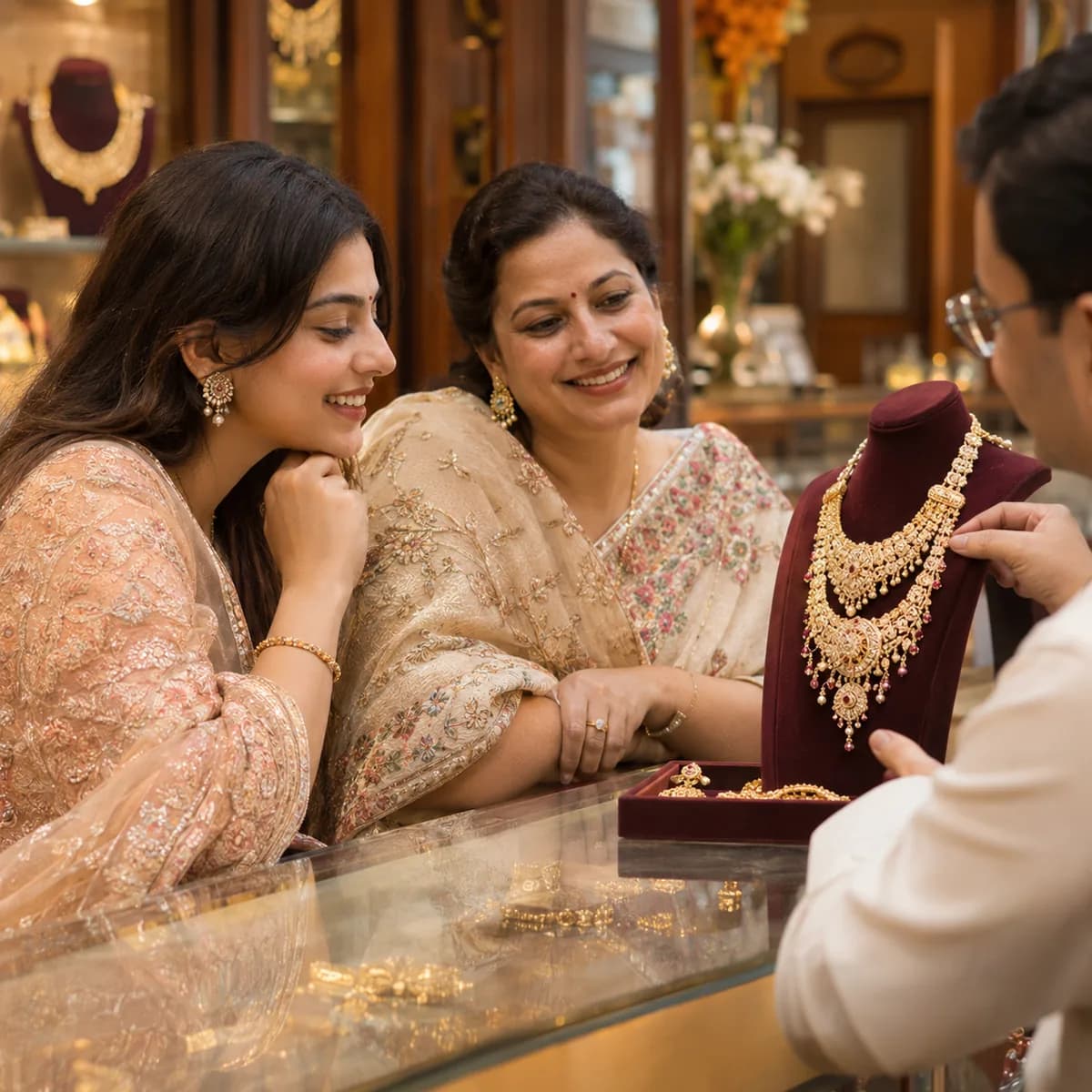
Every year, the week after Diwali, a jeweller client in Lucknow sees the same shift. The festive walk-ins buying coins and small gifts stop, and a different customer arrives: a mother, a bride and an aunt, with screenshots of necklaces saved from Instagram and a list of three other shops they plan to visit that day. They are not browsing. They are shortlisting. Whether this shop makes the final list depends on things decided weeks earlier: whether the Google listing showed recent bridal reviews, whether the Instagram grid looked like weddings they would want, and how fast someone replied on WhatsApp. This guide is about getting those things right for the season that starts now.
What changes for wedding businesses once Diwali ends?
The buyer changes. Festive shoppers make quick, low-value decisions; Unicommerce's festive report found 85% of e-commerce orders were under ₹1,000 this Diwali season. Wedding buyers do the opposite: a few large, considered purchases, researched for weeks and decided by several family members together.
That means your marketing has to work over a longer window. A single post or ad rarely books a wedding. A consistent presence across Google, Instagram and WhatsApp, with proof from real weddings, does.
What is Shortlisting window?
The period, often several weeks, between a family deciding on a wedding date and confirming its vendors. During this window they compare three to five options per category, mostly on Google Maps, Instagram and WhatsApp, so being visible and trusted here decides who gets booked.
+21% YoY
E-commerce order volume growth in India's 2026 Diwali season, per Unicommerce's festive report published 6 November.
Source: Unicommerce festive report, 6 Nov 2026
Where do Indian families look for wedding vendors?
In our client work, the path usually starts with a Google Maps search ("bridal makeup near me", "banquet hall in Dwarka"), moves to Instagram to check real work, and ends on WhatsApp to ask about prices and dates. Wedding marketplaces and word of mouth matter too, but almost every route passes through those three.
Each wedding category leans on these channels differently. The table below is how we prioritise effort for clients.
| Business | First priority | Second priority | What to show |
|---|---|---|---|
| Jewellers | Google Business Profile and reviews | Instagram Reels of bridal sets on real brides | Craft, weight and making charges explained, try-on moments |
| Venues and banquet halls | Google Business Profile with recent photos | Meta lead ads by locality | Real décor set-ups, capacity, parking, package ranges |
| Bridal salons and makeup artists | Instagram portfolio | Google reviews mentioning bridal work | Before-and-after, skin tones, trial process |
| Photographers and videographers | Instagram and YouTube | Referrals from venues and planners | Full wedding stories, not just highlight frames |
| Caterers and decorators | WhatsApp catalogue and referrals | Google Business Profile | Menus and set-ups from real events with guest counts |
How do wedding businesses build a brand people remember?
Wedding vendors in the same city often look identical online: the same lehenga shots, the same mandap angles, the same "premium services" line. Families remember the vendor with a clear point of view: the jeweller known for lightweight temple sets, the salon known for natural bridal looks on darker skin tones, the venue known for handling 600 guests without a parking jam.
Pick one thing you want to be known for and repeat it everywhere: Google Business Profile description, Instagram bio, WhatsApp greeting, and the first line of every reel. Consistency is what turns a vendor into a name a family repeats to a cousin.
Real weddings beat stock
With permission, post work from real weddings you have done, tagged with the locality. Families trust a slightly imperfect real photo from a venue they know over a flawless image that could be anywhere.
Rather talk it through?
A 15-minute call with a strategist is often faster than reading the rest. Share your goal and we'll call you back.
What should a wedding vendor do in the next six weeks?
The plan below is the one we give wedding clients the week Diwali ends. It is designed to be done by a small team alongside actual bookings.
Six-week wedding season plan
- 1Week 1: Fix your Google Business Profile. Correct category, hours, wedding-specific services, and 20 or more recent photos of real work.
- 2Week 1: Ask for reviews from last season's couples and families, by WhatsApp, with a direct review link.
- 3Week 2: Set up a WhatsApp Business catalogue with packages or price ranges and a quick-reply greeting.
- 4Weeks 2–3: Post three real-wedding Reels a week showing your one point of difference.
- 5Weeks 3–4: Run Meta lead or click-to-WhatsApp ads within a few kilometres of your location, targeting your best-performing Reels.
- 6Weeks 4–6: Reply to every enquiry within minutes during business hours, and follow up shortlisting families within 48 hours with a specific next step: visit, trial or quote.
Should wedding businesses discount in the season?
Usually not. Wedding buyers are spending on a once-in-a-lifetime event and are wary of anything that feels cheap. Discounts work better as value adds: a free trial for bridal makeup, complimentary cleaning for jewellery bought this season, a décor upgrade for bookings confirmed before a date.
Where you do run offers, make them time-bound and tied to confirming early, which helps your own planning more than a blanket price cut. Price transparency builds more trust than a big percentage: even a package range on WhatsApp saves a family a visit.
Value adds that work better than discounts
- Free makeup or hair trial with bridal booking
- Complimentary jewellery cleaning or resizing for a year
- Décor or lighting upgrade for early confirmation
- Pre-wedding shoot add-on at a bundled price
How should wedding businesses measure the season?
Track the funnel, not just footfall. Count enquiries by source (Google, Instagram, WhatsApp ads, referrals), how many became visits or trials, and how many became bookings. A venue that gets 200 enquiries and books 12 has a different problem from one that gets 40 and books 10.
Use a simple shared sheet or a CRM, tag every enquiry with its source, and review weekly. By January you will know which channel to fund for next year's season.
“Wedding buyers do not choose the cheapest vendor. They choose the one they trust to get the day right, and they decide that long before they visit.”
Key takeaways
- After Diwali, buyers shift from quick festive purchases to considered wedding decisions made by families over several weeks.
- Wedding vendors get found on Google Maps, remembered on Instagram and booked on WhatsApp; fix all three with real-wedding proof.
- Prefer value adds over discounts, reply to enquiries within minutes, and track every enquiry by source to plan next year's season.
Frequently asked questions
How can wedding vendors get more bookings in India?
Make sure families can find you on Google Maps with a complete profile and recent reviews, show real weddings you have done on Instagram, and reply to WhatsApp enquiries quickly with clear packages. Speed and proof convert shortlisting families into bookings.
When does wedding season marketing start in India?
Effectively, as Diwali ends. Families begin shortlisting vendors for the wedding muhurats that follow, so your Google profile, reviews and Instagram portfolio should be ready by the first week after Diwali.
What is the best marketing channel for jewellers during wedding season?
Google Business Profile with strong bridal reviews usually comes first, because families search for jewellers near them. Instagram Reels of bridal sets on real brides and quick WhatsApp replies on price and making charges are the next priorities.
Should wedding businesses offer discounts?
Generally, value adds work better than discounts for high-value wedding purchases. Free trials, complimentary services or upgrades for early confirmation protect your positioning while still giving families a reason to book now.
Do Meta ads work for wedding venues and salons?
Yes, when they are targeted tightly by location and use real-wedding creative. Click-to-WhatsApp and lead ads within a few kilometres of the venue or salon tend to work best, backed by a fast reply process.
Tools & next steps
Put this into practice, go deeper, or see how we'd do it for you.
Written by

Mr. Chandan Kumar
Founder & Performance Marketing Director, Global Info Edge
Founder of Global Info Edge and a performance-marketing specialist with 18+ years — Google & Meta ads, conversion funnels and measurable growth.
View full profile